
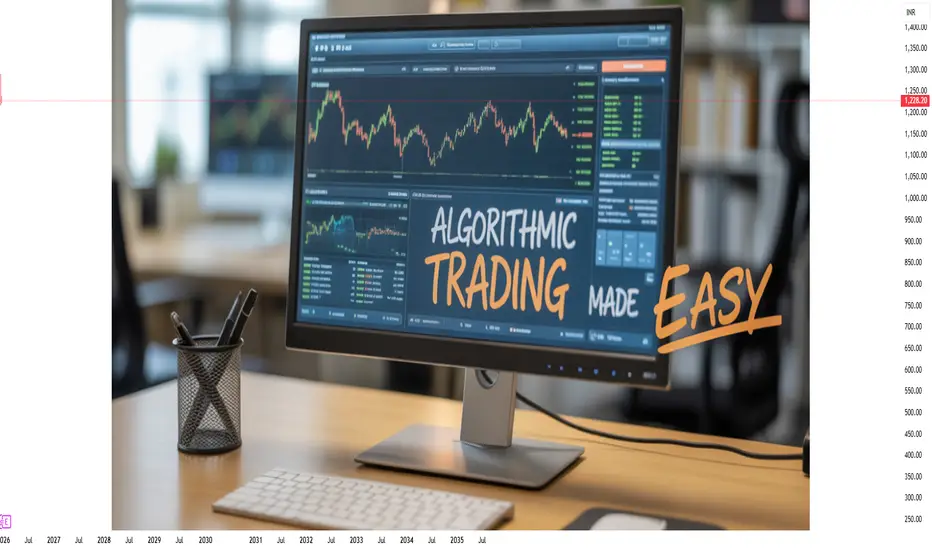
Data, Discipline & Technology Create Smarter Profits
In today’s fast-moving financial markets, speed, accuracy, and discipline matter more than ever. Human emotions, delayed reactions, and inconsistent decision-making often stand between traders and consistent profitability. This is where Algorithmic Trading transforms the game. Algorithmic trading is not just a tool—it is a systematic, data-driven approach that empowers traders and investors to participate in markets with precision, confidence, and control.
Algorithmic trading, also known as algo trading, uses pre-defined rules, mathematical models, and computer programs to automatically execute trades. These algorithms analyze market data, identify opportunities, and place trades faster and more efficiently than any human ever could. Whether you trade stocks, indices, futures, options, or currencies, algorithmic trading helps eliminate guesswork and replaces it with logic and structure.
Why Algorithmic Trading Is the Future of Trading
Financial markets operate 24/7 with massive volumes of data flowing every second. Manual trading struggles to keep up with this speed and complexity. Algorithmic trading thrives in this environment because it is built for scale, speed, and consistency. Algorithms can scan hundreds of instruments simultaneously, apply complex strategies in real time, and react instantly to changing market conditions.
One of the biggest advantages of algorithmic trading is emotion-free execution. Fear, greed, hesitation, and overconfidence are the biggest enemies of traders. Algorithms follow rules without deviation. Once a strategy is defined—entry, exit, risk management, and position sizing—the system executes it with discipline every single time. This consistency is the foundation of long-term trading success.
Core Components of Algorithmic Trading
Algorithmic trading combines multiple powerful elements into a single automated framework:
Market Data Analysis: Algorithms process price, volume, volatility, and order flow data to identify patterns and trends.
Strategy Logic: Rules are built using technical indicators, statistical models, price action, or quantitative formulas.
Risk Management: Stop-losses, take-profits, capital allocation, and drawdown controls are embedded directly into the system.
Execution Speed: Trades are placed in milliseconds, reducing slippage and missed opportunities.
Backtesting & Optimization: Strategies are tested on historical data to evaluate performance before live deployment.
Together, these components create a professional-grade trading system that operates with precision and reliability.
Types of Algorithmic Trading Strategies
Algorithmic trading is flexible and adaptable to different trading styles and market conditions. Some of the most popular strategy categories include:
Trend-Following Algorithms: Designed to capture sustained market moves using moving averages, breakouts, and momentum indicators.
Mean Reversion Strategies: Based on the idea that prices revert to their average over time, ideal for range-bound markets.
Arbitrage Algorithms: Exploit small price differences across markets or instruments with high-speed execution.
Statistical & Quantitative Models: Use probability, correlations, and advanced math to identify high-probability setups.
Options & Volatility Algorithms: Focus on implied volatility, option Greeks, and premium decay for structured returns.
These strategies can be customized for intraday, swing, positional, or long-term investing approaches.
Benefits for Traders and Investors
Algorithmic trading offers advantages for both individual traders and professional investors:
Consistency: Same rules, same discipline, every trade.
Efficiency: Ability to monitor and trade multiple markets at once.
Reduced Costs: Optimized execution helps lower slippage and transaction costs.
Transparency: Clear logic and measurable performance metrics.
Scalability: Strategies can be deployed with small or large capital without changing the core logic.
For beginners, algorithms provide structure and protection from emotional mistakes. For experienced traders, they offer scalability and precision that manual trading cannot match.
Algorithmic Trading in the Indian Market Context
With the rapid growth of Indian equity, derivatives, and commodity markets, algorithmic trading has become increasingly relevant. Rising participation, tighter spreads, and higher liquidity make automation essential for competitive trading. Retail traders are now gaining access to tools that were once reserved for institutions, enabling them to trade smarter rather than harder.
Algorithmic trading also aligns perfectly with regulatory frameworks when designed responsibly, ensuring transparency, risk control, and compliance.
From Idea to Execution: The Algorithmic Trading Journey
The journey begins with a simple idea—an edge in the market. This idea is converted into a logical strategy, tested on historical data, refined through optimization, and finally deployed in live markets. Performance is continuously monitored, and strategies evolve with changing market conditions. This cycle of research, execution, and improvement is what makes algorithmic trading a living, adaptive system rather than a static approach.
Who Should Use Algorithmic Trading?
Algorithmic trading is suitable for:
Traders seeking consistency and discipline
Investors aiming for systematic wealth creation
Professionals managing multiple strategies or accounts
Anyone tired of emotional decision-making and random outcomes
You do not need to predict the market perfectly. You need a system that manages probability, risk, and execution effectively—and that is exactly what algorithmic trading delivers.
The Competitive Edge You Can’t Ignore
Markets reward preparation, discipline, and speed. Algorithmic trading provides all three. In an environment where milliseconds matter and emotions are costly, relying solely on manual trading is no longer enough. Algorithms do not get tired, distracted, or emotional. They simply execute your strategy with precision.
Conclusion: Trade the System, Not the Stress
Algorithmic trading is more than automation—it is a mindset shift. It transforms trading from a stressful, reactive activity into a structured, rule-based process. By combining technology, data, and discipline, algorithmic trading empowers you to trade with confidence, clarity, and control.
If you want to move beyond guesswork and emotions, and step into a future where logic drives profits, Algorithmic Trading is your next evolution.
In today’s fast-moving financial markets, speed, accuracy, and discipline matter more than ever. Human emotions, delayed reactions, and inconsistent decision-making often stand between traders and consistent profitability. This is where Algorithmic Trading transforms the game. Algorithmic trading is not just a tool—it is a systematic, data-driven approach that empowers traders and investors to participate in markets with precision, confidence, and control.
Algorithmic trading, also known as algo trading, uses pre-defined rules, mathematical models, and computer programs to automatically execute trades. These algorithms analyze market data, identify opportunities, and place trades faster and more efficiently than any human ever could. Whether you trade stocks, indices, futures, options, or currencies, algorithmic trading helps eliminate guesswork and replaces it with logic and structure.
Why Algorithmic Trading Is the Future of Trading
Financial markets operate 24/7 with massive volumes of data flowing every second. Manual trading struggles to keep up with this speed and complexity. Algorithmic trading thrives in this environment because it is built for scale, speed, and consistency. Algorithms can scan hundreds of instruments simultaneously, apply complex strategies in real time, and react instantly to changing market conditions.
One of the biggest advantages of algorithmic trading is emotion-free execution. Fear, greed, hesitation, and overconfidence are the biggest enemies of traders. Algorithms follow rules without deviation. Once a strategy is defined—entry, exit, risk management, and position sizing—the system executes it with discipline every single time. This consistency is the foundation of long-term trading success.
Core Components of Algorithmic Trading
Algorithmic trading combines multiple powerful elements into a single automated framework:
Market Data Analysis: Algorithms process price, volume, volatility, and order flow data to identify patterns and trends.
Strategy Logic: Rules are built using technical indicators, statistical models, price action, or quantitative formulas.
Risk Management: Stop-losses, take-profits, capital allocation, and drawdown controls are embedded directly into the system.
Execution Speed: Trades are placed in milliseconds, reducing slippage and missed opportunities.
Backtesting & Optimization: Strategies are tested on historical data to evaluate performance before live deployment.
Together, these components create a professional-grade trading system that operates with precision and reliability.
Types of Algorithmic Trading Strategies
Algorithmic trading is flexible and adaptable to different trading styles and market conditions. Some of the most popular strategy categories include:
Trend-Following Algorithms: Designed to capture sustained market moves using moving averages, breakouts, and momentum indicators.
Mean Reversion Strategies: Based on the idea that prices revert to their average over time, ideal for range-bound markets.
Arbitrage Algorithms: Exploit small price differences across markets or instruments with high-speed execution.
Statistical & Quantitative Models: Use probability, correlations, and advanced math to identify high-probability setups.
Options & Volatility Algorithms: Focus on implied volatility, option Greeks, and premium decay for structured returns.
These strategies can be customized for intraday, swing, positional, or long-term investing approaches.
Benefits for Traders and Investors
Algorithmic trading offers advantages for both individual traders and professional investors:
Consistency: Same rules, same discipline, every trade.
Efficiency: Ability to monitor and trade multiple markets at once.
Reduced Costs: Optimized execution helps lower slippage and transaction costs.
Transparency: Clear logic and measurable performance metrics.
Scalability: Strategies can be deployed with small or large capital without changing the core logic.
For beginners, algorithms provide structure and protection from emotional mistakes. For experienced traders, they offer scalability and precision that manual trading cannot match.
Algorithmic Trading in the Indian Market Context
With the rapid growth of Indian equity, derivatives, and commodity markets, algorithmic trading has become increasingly relevant. Rising participation, tighter spreads, and higher liquidity make automation essential for competitive trading. Retail traders are now gaining access to tools that were once reserved for institutions, enabling them to trade smarter rather than harder.
Algorithmic trading also aligns perfectly with regulatory frameworks when designed responsibly, ensuring transparency, risk control, and compliance.
From Idea to Execution: The Algorithmic Trading Journey
The journey begins with a simple idea—an edge in the market. This idea is converted into a logical strategy, tested on historical data, refined through optimization, and finally deployed in live markets. Performance is continuously monitored, and strategies evolve with changing market conditions. This cycle of research, execution, and improvement is what makes algorithmic trading a living, adaptive system rather than a static approach.
Who Should Use Algorithmic Trading?
Algorithmic trading is suitable for:
Traders seeking consistency and discipline
Investors aiming for systematic wealth creation
Professionals managing multiple strategies or accounts
Anyone tired of emotional decision-making and random outcomes
You do not need to predict the market perfectly. You need a system that manages probability, risk, and execution effectively—and that is exactly what algorithmic trading delivers.
The Competitive Edge You Can’t Ignore
Markets reward preparation, discipline, and speed. Algorithmic trading provides all three. In an environment where milliseconds matter and emotions are costly, relying solely on manual trading is no longer enough. Algorithms do not get tired, distracted, or emotional. They simply execute your strategy with precision.
Conclusion: Trade the System, Not the Stress
Algorithmic trading is more than automation—it is a mindset shift. It transforms trading from a stressful, reactive activity into a structured, rule-based process. By combining technology, data, and discipline, algorithmic trading empowers you to trade with confidence, clarity, and control.
If you want to move beyond guesswork and emotions, and step into a future where logic drives profits, Algorithmic Trading is your next evolution.

I built a Buy & Sell Signal Indicator with 85% accuracy.
📈 Get access via DM or
WhatsApp: wa.link/adyqmn
Contact - +91 99997 64120
| Email: techncialexpress@gmail.com
| Script Coder | Trader | Investor | From India
📈 Get access via DM or
WhatsApp: wa.link/adyqmn
Contact - +91 99997 64120
| Email: techncialexpress@gmail.com
| Script Coder | Trader | Investor | From India
相关出版物
免责声明
这些信息和出版物并非旨在提供,也不构成TradingView提供或认可的任何形式的财务、投资、交易或其他类型的建议或推荐。请阅读使用条款了解更多信息。
I built a Buy & Sell Signal Indicator with 85% accuracy.
📈 Get access via DM or
WhatsApp: wa.link/adyqmn
Contact - +91 99997 64120
| Email: techncialexpress@gmail.com
| Script Coder | Trader | Investor | From India
📈 Get access via DM or
WhatsApp: wa.link/adyqmn
Contact - +91 99997 64120
| Email: techncialexpress@gmail.com
| Script Coder | Trader | Investor | From India
相关出版物
免责声明
这些信息和出版物并非旨在提供,也不构成TradingView提供或认可的任何形式的财务、投资、交易或其他类型的建议或推荐。请阅读使用条款了解更多信息。