RSI-price divergence shown on 1h chart, keep noticingOn the 1-hour chart, we're seeing an RSI-price divergence. Monitoring for potential continuation of this divergence—looking for a minor pullback to go long.做多由S2A9提供0
4H showing RSI-price divergence alsoAs shown in the chart, both the 1H and 4H timeframes are showing RSI-price divergence (bearish signal), forming a multi-timeframe bearish confluence. Currently monitoring for a potential pullback to test the $22.5 support level - if held, this could present a long entry opportunity with favorable R/R. 做多由S2A9提供0
简单来说一下现在的观点 //@version=5 indicator("缠论终极指标", overlay=true, max_labels_count=500, max_lines_count=500, max_boxes_count=200, max_bars_back=5000) // ===== 参数系统 ===== fractalStrictness = input.int(3, "分型严格度", minval=1, maxval=5) biMinBars = input.int(5, "笔最小K线数", minval=4, maxval=10) segmentMinBis = input.int(3, "线段最小笔数", minval=2, maxval=5) recursionDepth = input.int(3, "递归深度", minval=1, maxval=5) showDecomposition = input(false, "显示多义分解") showBi = input(true, "显示笔") showSegment = input(true, "显示线段") showZH = input(true, "显示中枢") showBS = input(true, "显示买卖点") // ===== 核心数据结构 ===== var fractalPoints = array.new() // var biLines = array.new() // var segments = array.new() // var zhongshus = array.new() // var decompositionOptions = array.new() // 多义分解选项 // ===== 1. 分型系统 ===== f_handleInclude() => = = [high , low ] direction = curHigh > prevHigh ? 1 : curLow < prevLow ? -1 : 0 if direction >= 0 and curHigh <= prevHigh and curLow >= prevLow curHigh := prevHigh curLow := prevLow else if direction <= 0 and curHigh >= prevHigh and curLow <= prevLow curHigh := prevHigh curLow := prevLow f_isStrictFractal(type, offset) => lookback = fractalStrictness if type == 1 cond1 = high >= high and high >= high cond2 = high > high and high > high cond3 = (high - low ) > ta.atr(14)*0.5 cond1 and cond2 and cond3 else cond1 = low <= low and low <= low cond2 = low < low and low < low cond3 = (high - low ) > ta.atr(14)*0.5 cond1 and cond2 and cond3 // ===== 2. 笔识别系统 ===== f_identifyBi() => if array.size(fractalPoints) < 4 return fp2 = array.get(fractalPoints, array.size(fractalPoints)-3) fp3 = array.get(fractalPoints, array.size(fractalPoints)-2) idx2 = array.get(fp2, 0) price2 = array.get(fp2, 1) type2 = array.get(fp2, 2) idx3 = array.get(fp3, 0) price3 = array.get(fp3, 1) type3 = array.get(fp3, 2) if (idx3 - idx2) < biMinBars return if type2 == -1 and type3 == 1 and price3 > price2 newBi = array.from(idx2, idx3, price2, price3, 1) array.push(biLines, newBi) else if type2 == 1 and type3 == -1 and price3 < price2 newBi = array.from(idx2, idx3, price2, price3, -1) array.push(biLines, newBi) // ===== 3. 线段识别系统 ===== f_processCharacteristicSequence() => if array.size(biLines) < 4 return var currentSegment = array.new() var characteristicSeq = array.new() var segmentDirection = 0 for i = 0 to array.size(biLines) - 1 bi = array.get(biLines, i) dir = array.get(bi, 4) if array.size(currentSegment) == 0 array.push(currentSegment, bi) segmentDirection := dir array.push(characteristicSeq, array.get(bi, 3)) else element = dir == segmentDirection ? array.get(bi, 3) : na if not na(element) array.push(characteristicSeq, element) if (segmentDirection == 1 and dir == -1 and array.get(bi, 3) < array.get(array.get(currentSegment, array.size(currentSegment)-1), 3)) or (segmentDirection == -1 and dir == 1 and array.get(bi, 3) > array.get(array.get(currentSegment, array.size(currentSegment)-1), 3)) f_processIncludeCS(characteristicSeq, segmentDirection) if f_hasFractalInSeq(characteristicSeq, segmentDirection) startBi = array.get(currentSegment, 0) endBi = array.get(currentSegment, array.size(currentSegment)-1) newSegment = array.from( array.get(startBi, 0), array.get(endBi, 1), array.get(startBi, 2), array.get(endBi, 3), segmentDirection ) array.push(segments, newSegment) array.clear(currentSegment) array.clear(characteristicSeq) segmentDirection := dir array.push(currentSegment, bi) array.push(characteristicSeq, array.get(bi, 3)) else array.push(currentSegment, bi) else array.push(currentSegment, bi) f_processIncludeCS(seq, dir) => if array.size(seq) < 2 return for i = array.size(seq)-1 downto 1 cur = array.get(seq, i) prev = array.get(seq, i-1) if dir == 1 if cur <= prev array.set(seq, i-1, math.max(cur, prev)) array.remove(seq, i) else if cur >= prev array.set(seq, i-1, math.min(cur, prev)) array.remove(seq, i) f_hasFractalInSeq(seq, dir) => if array.size(seq) < 3 return false if dir == 1 for i = 1 to array.size(seq)-2 if array.get(seq, i) > array.get(seq, i-1) and array.get(seq, i) > array.get(seq, i+1) return true else for i = 1 to array.size(seq)-2 if array.get(seq, i) < array.get(seq, i-1) and array.get(seq, i) < array.get(seq, i+1) return true false // ===== 4. 中枢识别系统 ===== f_identifyZhongshu(level, sourceArray) => if array.size(sourceArray) < 3 return for i = 0 to array.size(sourceArray) - 3 seg1 = array.get(sourceArray, i) seg2 = array.get(sourceArray, i+1) seg3 = array.get(sourceArray, i+2) high1 = math.max(array.get(seg1, 2), array.get(seg1, 3)) low1 = math.min(array.get(seg1, 2), array.get(seg1, 3)) high2 = math.max(array.get(seg2, 2), array.get(seg2, 3)) low2 = math.min(array.get(seg2, 2), array.get(seg2, 3)) high3 = math.max(array.get(seg3, 2), array.get(seg3, 3)) low3 = math.min(array.get(seg3, 2), array.get(seg3, 3)) zhHigh = math.min(math.max(high1, high2), math.max(high2, high3)) zhLow = math.max(math.min(low1, low2), math.min(low2, low3)) if zhHigh > zhLow startIdx = math.min(array.get(seg1, 0), array.get(seg2, 0), array.get(seg3, 0)) endIdx = math.max(array.get(seg1, 1), array.get(seg2, 1), array.get(seg3, 1)) dir = array.get(seg1, 4) == 1 and array.get(seg2, 4) == -1 and array.get(seg3, 4) == 1 ? 1 : array.get(seg1, 4) == -1 and array.get(seg2, 4) == 1 and array.get(seg3, 4) == -1 ? -1 : 0 newZhongshu = array.from(startIdx, endIdx, zhHigh, zhLow, level, dir) array.push(zhongshus, newZhongshu) // ===== 5. 背驰检测系统 ===== f_detectDivergenceMultiLevel() => = request.security(syminfo.tickerid, "1", ta.macd(close, 12, 26, 9)) = request.security(syminfo.tickerid, "5", ta.macd(close, 12, 26, 9)) = request.security(syminfo.tickerid, "30", ta.macd(close, 12, 26, 9)) area1 = math.sum(macd1, 10) area5 = math.sum(macd5, 10) area30 = math.sum(macd30, 10) divergenceLevel = 0 if area1 < area1 and area5 < area5 and area30 < area30 divergenceLevel := -1 else if area1 > area1 and area5 > area5 and area30 > area30 divergenceLevel := 1 divergenceLevel // ===== 6. 买卖点系统 ===== f_identifyBuySell() => if array.size(zhongshus) < 5 return lastZH = array.get(zhongshus, array.size(zhongshus)-1) zhHigh = array.get(lastZH, 2) zhLow = array.get(lastZH, 3) zhLevel = array.get(lastZH, 4) divLevel = f_detectDivergenceMultiLevel() // 一买 if low < zhLow and divLevel == 1 subLevelSignal = request.security(syminfo.tickerid, tostring(zhLevel-1)+"F", f_getFirstBuySignal()) if subLevelSignal and showBS label.new(bar_index, low, "①买", color=color.new(#00FF00, 0), style=label.style_label_up, textcolor=color.white, size=size.normal) // 二买 if low > zhLow and low < zhHigh subLevelDiv = request.security(syminfo.tickerid, tostring(zhLevel-1)+"F", f_detectDivergenceMultiLevel()) == 1 if subLevelDiv and showBS label.new(bar_index, low, "②买", color=color.new(#90EE90, 0), style=label.style_label_up, textcolor=color.black, size=size.normal) // 三买 if low > zhHigh and ta.lowest(low, 3) == low subLevelSignal = request.security(syminfo.tickerid, tostring(zhLevel-1)+"F", f_getThirdBuySignal()) if subLevelSignal and showBS label.new(bar_index, low, "③买", color=color.new(#1E90FF, 0), style=label.style_label_up, textcolor=color.white, size=size.normal) // 一卖 if high > zhHigh and divLevel == -1 subLevelSignal = request.security(syminfo.tickerid, tostring(zhLevel-1)+"F", f_getFirstSellSignal()) if subLevelSignal and showBS label.new(bar_index, high, "①卖", color=color.new(#FF0000, 0), style=label.style_label_down, textcolor=color.white, size=size.normal) // 三卖 if high < zhLow and ta.highest(high, 3) == high subLevelSignal = request.security(syminfo.tickerid, tostring(zhLevel-1)+"F", f_getThirdSellSignal()) if subLevelSignal and showBS label.new(bar_index, high, "③卖", color=color.new(#8B0000, 0), style=label.style_label_down, textcolor=color.white, size=size.normal) // ===== 7. 多义分解系统 ===== f_generateDecompositionOptions() => if showDecomposition // 标准分解 standardOption = for i = 0 to array.size(segments)-1 seg = array.get(segments, i) standardOption.push(seg) array.push(decompositionOptions, standardOption) // 简化分解 simplifiedOption = for i = 0 to math.floor(array.size(segments)/2)*2-1 by 2 if i+1 < array.size(segments) seg1 = array.get(segments, i) seg2 = array.get(segments, i+1) newSeg = array.from( array.get(seg1, 0), array.get(seg2, 1), array.get(seg1, 2), array.get(seg2, 3), array.get(seg1, 4) ) simplifiedOption.push(newSeg) array.push(decompositionOptions, simplifiedOption) // ===== 8. 辅助函数 ===== f_getFirstBuySignal() => // 简化的次级别一买检测 array.size(zhongshus) > 0 and low < array.get(array.get(zhongshus, array.size(zhongshus)-1), 3) f_getThirdBuySignal() => // 简化的次级别三买检测 array.size(zhongshus) > 0 and low > array.get(array.get(zhongshus, array.size(zhongshus)-1), 2) f_getFirstSellSignal() => array.size(zhongshus) > 0 and high > array.get(array.get(zhongshus, array.size(zhongshus)-1), 2) f_getThirdSellSignal() => array.size(zhongshus) > 0 and high < array.get(array.get(zhongshus, array.size(zhongshus)-1), 3) // ===== 9. 可视化系统 ===== f_renderFractals() => for i = math.max(0, array.size(fractalPoints)-100) to array.size(fractalPoints)-1 fp = array.get(fractalPoints, i) if array.get(fp, 3) idx = array.get(fp, 0) price = array.get(fp, 1) type = array.get(fp, 2) if type == 1 label.new(idx, price, "⊼", color=color.red, style=label.style_label_down, textcolor=color.white, size=size.small) else label.new(idx, price, "⊻", color=color.green, style=label.style_label_up, textcolor=color.white, size=size.small) f_renderBi() => if showBi for i = math.max(0, array.size(biLines)-50) to array.size(biLines)-1 bi = array.get(biLines, i) startIdx = array.get(bi, 0) startPrice = array.get(bi, 2) endIdx = array.get(bi, 1) endPrice = array.get(bi, 3) dir = array.get(bi, 4) lineColor = dir == 1 ? color.blue : color.red line.new(startIdx, startPrice, endIdx, endPrice, color=lineColor, width=2) f_renderSegments() => if showSegment for i = math.max(0, array.size(segments)-20) to array.size(segments)-1 seg = array.get(segments, i) startIdx = array.get(seg, 0) startPrice = array.get(seg, 2) endIdx = array.get(seg, 1) endPrice = array.get(seg, 3) dir = array.get(seg, 4) lineColor = dir == 1 ? color.purple : color.orange line.new(startIdx, startPrice, endIdx, endPrice, color=lineColor, width=3) f_renderZhongshu() => if showZH for i = math.max(0, array.size(zhongshus)-10) to array.size(zhongshus)-1 zh = array.get(zhongshus, i) startIdx = array.get(zh, 0) endIdx = array.get(zh, 1) zhHigh = array.get(zh, 2) zhLow = array.get(zh, 3) level = array.get(zh, 4) boxColor = level == 1 ? color.new(color.blue, 80) : level == 2 ? color.new(color.purple, 80) : color.new(color.orange, 80) box.new(startIdx, zhHigh, endIdx, zhLow, border_color=color.gray, bgcolor=boxColor, border_width=1) label.new(startIdx, zhHigh, "ZG", color=color.red, style=label.style_label_down, textcolor=color.white, size=size.small) label.new(startIdx, zhLow, "ZD", color=color.green, style=label.style_label_up, textcolor=color.white, size=size.small) f_renderDecomposition() => if showDecomposition and array.size(decompositionOptions) > 0 for optionIdx = 0 to array.size(decompositionOptions)-1 option = array.get(decompositionOptions, optionIdx) lineColor = optionIdx == 0 ? color.blue : optionIdx == 1 ? color.purple : color.orange for j = 0 to array.size(option)-1 seg = array.get(option, j) line.new(array.get(seg, 0), array.get(seg, 2), array.get(seg, 1), array.get(seg, 3), color=lineColor, width=1, style=line.style_dashed) // ===== 10. 主执行逻辑 ===== = f_handleInclude() // 分型检测 if f_isStrictFractal(1, 1) confirmed = high > high and high > high array.push(fractalPoints, array.from(bar_index-1, high , 1, confirmed)) else if f_isStrictFractal(-1, 1) confirmed = low < low and low < low array.push(fractalPoints, array.from(bar_index-1, low , -1, confirmed)) // 每5根K线执行一次完整分析 if bar_index % 5 == 0 or barstate.islast f_identifyBi() f_processCharacteristicSequence() // 递归中枢分析 for level = 1 to recursionDepth sourceArray = level == 1 ? biLines : segments f_identifyZhongshu(level, sourceArray) f_generateDecompositionOptions() f_identifyBuySell() // 可视化渲染 f_renderFractals() f_renderBi() f_renderSegments() f_renderZhongshu() f_renderDecomposition() // 背驰标记 divLevel = f_detectDivergenceMultiLevel() if divLevel != 0 priceLevel = divLevel == 1 ? low : high labelColor = divLevel == 1 ? color.green : color.red labelStyle = divLevel == 1 ? label.style_label_up : label.style_label_down text = divLevel == 1 ? "底背驰" : "顶背驰" label.new(bar_index, priceLevel, text, color=labelColor, style=labelStyle, textcolor=color.white, size=size.normal) // 状态显示 if barstate.islast label.new(bar_index, high, "缠论100%还原系统", color=color.blue, style=label.style_label_center, textcolor=color.white)由UnknownUnicorn71024100提供226
辣条技术展望:多周期趋势动能向上 LTC Technical OutlookLTC Technical Outlook: Multi-Timeframe Momentum Alignment & Demand Zone Synergy Fuel Bullish Structure 辣条技术展望:多周期趋势动能向上+需求区共振强化看涨架构 技术面分析 多周期分析显示,LTC在关键**需求区**持续蓄力,且看涨动能同步增强: 短期(1H-4H): EMA20/50/100形成三层金叉结构(dif25↑,dif50↑↑),MACD柱状图在零轴上方扩张; 中期(日线): EMA50/100差值(dif50-daily)从空头压缩中反转,RSI(14)稳居看涨区间(50-70)且无背离; 结构锚点: 价格在多周期共振需求区上方震荡(4H摆动低点与日线斐波那契0.618重合),"未来之眼"指标在1H/4H图表中检测到密集看涨订单区块。 量能动态揭示机构痕迹: 需求区回测时买入量能脉冲式增长; 4H/日线累积成交量差值(CVD)转正,确认买方主导。 核心逻辑 1. 多周期需求区垂直共振 1H/4H/日线需求区形成纵向堆叠(看涨分形结构); 量能验证:流动性吸收阶段显示卖盘流动性递减; 2. 动量波段同步化 短期偏斜率(dif25)加速上行,中期dif50差值趋于稳定; MACD与随机震荡指标在1H/4H/日线三周期同步看涨; 3. 情绪转向确认 资金费率在长期负值后回归中性; 未平仓合约与价格同步上升,暗示聪明资金布局。 策略:优先在1H/4H需求区回踩时结合多周期动能确认布局多单;密切观察4H均值回归上轨(动态阻力)。 策略:聚焦1H/4H需求区回踩+多周期指标共振作为多单触发点,突破4H均值回归上轨可视为趋势加速信号。 逻辑强化注解 动能叠加效应:1H周期的EMA金叉与日线级别的动量底背离形成“时间序列共振”,大幅降低假突破概率; 流动性结构:4H需求区与周线级流动性缺口(CME期货未平仓跳空区)重叠,形成“宏观流动性引力”; 链上协同验证:LTC矿工持仓比率30日变化率转正,巨鲸地址周内净流入量创3个月新高(需补充链上数据)。 (注:翻译已保留技术术语精确性,并优化中文表达流畅度,关键逻辑层次用视觉符号强化。) Technical Analysis Multi-timeframe analysis shows LTC building energy across key Demand Zones, with synchronized bullish momentum: Short-term (1H-4H): EMA20/50/100 triple-layer golden cross configuration (dif25↑, dif50↑↑), supported by MACD histogram expanding above zero. Mid-term (Daily):** EMA50/100 divergence (dif50-daily) reverses from bearish compression, while RSI(14) holds bullish territory (50-70) with no divergence. Structural Anchors: Price consolidates above a multi-timeframe Confluence Demand Zone (aligned 4H swing low & daily Fibonacci 0.618), with "Future Eye" detecting stacked bullish order blocks across 1H/4H charts. Volume dynamics reveal institutional footprints: Rising buy-volume spikes on retests of demand zones; Cumulative Volume Delta (CVD) turns positive on 4H/daily, confirming bid dominance. Key Technical Factors 1. Multi-Timeframe Demand Zone Convergence - 1H/4H/daily demand zones vertically align (bullish fractal stacking); - Volume-based validation: Absorption phases show decreasing sell-side liquidity; 2. Momentum Wave Synchronization - Short-term Bias Rate (dif25) accelerates alongside mid-term dif50 stabilization; - MACD & Stochastic oscillators align bullish across 3 timeframes (1H/4H/daily); 3. Sentiment Shift Confirmation - Funding rates stabilize near neutral after prolonged negativity; - Open Interest rises alongside price, signaling smart money positioning. *Strategy: Prioritize long entries on 1H/4H demand zone retests with multi-timeframe momentum confirmation; Close monitoring of 4H Mean Regression Upper Band (dynamic resistance). 做多由AASFANS提供112
Gold will soon challenge $3,500! The monthly chart of gold shows a strong upward trend, technical indicators continue to rise, and the long-term outlook is bullish The weekly chart shows a continuous upward trend of big positive lines, technical indicators continue to rise, and the medium-term is bullish The daily chart is running in a strong upward trend, and the technical indicators show a slight top divergence. Be cautious in chasing highs in the short term; the 4-hour chart is running into a new high, and the technical indicators show a top divergence. Be bullish in the short term and do not chase highs. In summary, gold prices are bullish in the long, medium and short term. In terms of operation, you should go long on dips, but pay attention to the turning rhythm and be prepared to close positions for profits in time. In terms of operation, pay attention to the long opportunities in the 3460-82 area, defend 3450, and target 3500-3550.做多由k61nuw提供已更新 2
聊一个大资金情绪模型 **大资金情绪** 我之前确实一直在思考如何对大资金建模,有很多新颖的方法,也有很多传统的技术指标。大资金的指标都命名为Banker Fund。今天要说的这个指标使用价格和量能信息来描述大资金情绪。 首先,它利用价格信息(主要 EMA 和 SMA)和成交量信息以敏感的方式对大资金建模,并通过一种振荡器形式进行表达。其中这个指标中的0 轴是很关键,这就像MACD中的零轴一样,区别是它可以说是更及时地定义牛和熊趋势情绪的重要边界。 这个指标对价格和量能稳定性有要求,所以最好是将其用在1H周期或日线周期上。一些典型的判断方法包括: - 当0轴下方出现紫红色的柱子时,开始关注并观察周围的看涨反转。 - 当第一天在0轴上方出现红色柱子时,是确认看涨趋势的信号。 - 上涨趋势中间有回撤,开始做T+0交易,降低成本。 - 当柱线(大资金能量)在回撤后期突破前期高点,开始加仓,做短线多头中继,此时是最好的买入点! 当柱子回撤后期突破前期高点,且该股为近期热点板块或强势股时,可以考虑加仓等待主力拉升。 无论如何该指标不建议单独使用,应该根据自己交易系统中的其它要素进行综合判断。 对于标签的说明: - B:波段买,绿色 - S:波段卖,红色 对于振荡器柱子颜色说明: - 看涨趋势:红色 - 确认看涨趋势:栗色 - 看涨回撤:蓝色 - 看跌趋势:绿色 - 看跌回撤:紫红色 **大资金情绪源代码** 这个技术指标我开源发布在TradingView社区,链接如下: 这个指标的源代码,我贴在如下: ```pine // This source code is subject to the terms of the Mozilla Public License 2.0 at mozilla.org // © blackcat1402 //@version=4 study(" L3 Banker Fund Sentiment", overlay=false, max_bars_back=5000, max_labels_count=500) //func xrf(values, length) => r_val = float(na) if length >= 1 for i = 0 to length by 1 if na(r_val) or not na(values ) r_val := values r_val r_val //banker fund trend diff = ema(close,3)-ema(close,8) dea = ema(diff,3) macd = 2*(diff-dea) x1 = ema(diff,5)*5 x2 = ((ema(close,3)-ema(close,8)))*5 x3 = iff(x2>0,x2,0) plot(x3, color=x2>0?color.red:na) x4 = iff(x2<0,x2,0) plot(x4, color=x2<0?color.green:na) plotcandle(0,x2,0,x2, color=x2>0?color.red:na, bordercolor = x2>0?color.red:na) plotcandle(0,x2,0,x2, color=x2>0 and x20 and x2x1 and x2>xrf(x2,1)?color.fuchsia:na, bordercolor = x2<0 and x2>x1 and x2>xrf(x2,1)?color.fuchsia:na) banker_fund1 = x1 plot(banker_fund1, color=color.yellow, linewidth = 2) banker_fund2 = x2 plot(banker_fund1, color=color.blue, linewidth = 2) //volume info va = iff(close>xrf(close,1),volume,-volume) obv1 = sum(iff(close==xrf(close,1),0,va),4000) obv2 = ema(obv1,3)-sma(obv1,9) obv3 = ema(iff(obv2>0,obv2,0),3) mac3 = sma(close,3) plotcandle(0,x2,0,x2, color=obv3>xrf(obv3,1) and mac3>xrf(mac3,1)?color.maroon:na, bordercolor = obv3>xrf(obv3,1) and mac3>xrf(mac3,1)?color.maroon:na) //labels long = (crossover(banker_fund2,banker_fund1) and banker_fund1<-0.25) short = (crossunder(banker_fund2,banker_fund1) and banker_fund2>0.25) l_ls = short ? label.new (bar_index, x2, "S", color=color.red, textcolor=color.white, style=label.style_labeldown, yloc=yloc.price, size=size.small) : long ? label.new (bar_index, x2, "B", color=color.green, textcolor=color.white, style=label.style_labelup, yloc=yloc.price, size=size.small) : na // plot divergence lbR = input(title='Pivot Lookback Right', defval=5) lbL = input(title='Pivot Lookback Left', defval=5) rangeUpper = input(title='Max of Lookback Range', defval=60) rangeLower = input(title='Min of Lookback Range', defval=5) plotBull = input(title='Plot Bullish', defval=true) plotHiddenBull = input(title='Plot Hidden Bullish', defval=false) plotBear = input(title='Plot Bearish', defval=true) plotHiddenBear = input(title='Plot Hidden Bearish', defval=false) bearColor = color.new(color.fuchsia, 50) bullColor = color.new(color.yellow, 50) hiddenBullColor = color.green hiddenBearColor = color.red textColor = color.white noneColor = color.new(color.white, 100) osc = x2 plFound = na(pivotlow(osc, lbL, lbR)) ? false : true phFound = na(pivothigh(osc, lbL, lbR)) ? false : true _inRange(cond) => bars = barssince(cond == true) rangeLower <= bars and bars <= rangeUpper //------------------------------------------------------------------------------ // Regular Bullish // Osc: Higher Low oscHL = osc > valuewhen(plFound, osc , 1) and _inRange(plFound ) // Price: Lower Low priceLL = low < valuewhen(plFound, low , 1) bullCond = plotBull and priceLL and oscHL and plFound plot(plFound ? osc : na, offset=-lbR, title='Regular Bullish', linewidth=2, color=bullCond ? bullColor : noneColor, transp=0) plotshape(bullCond ? osc : na, offset=-lbR, title='Regular Bullish Label', text=' confirmed bullish ', style=shape.labelup, location=location.absolute, color=bullColor, textcolor=color.new(textColor, 0), transp=0) alertcondition(bullCond, title='Regular bullish divergence found', message='Check charts for a regular bullish divergence found') //------------------------------------------------------------------------------ // Hidden Bullish // Osc: Lower Low oscLL = osc < valuewhen(plFound, osc , 1) and _inRange(plFound ) // Price: Higher Low priceHL = low > valuewhen(plFound, low , 1) hiddenBullCond = plotHiddenBull and priceHL and oscLL and plFound plot(plFound ? osc : na, offset=-lbR, title='Hidden Bullish', linewidth=2, color=hiddenBullCond ? hiddenBullColor : noneColor, transp=0) plotshape(hiddenBullCond ? osc : na, offset=-lbR, title='Hidden Bullish Label', text=' unconfirmed bullish ', style=shape.labelup, location=location.absolute, color=bullColor, textcolor=color.new(textColor, 0), transp=0) alertcondition(hiddenBullCond, title='Hidden bullish divergence found', message='Check charts for a hidden bullish divergence found') //------------------------------------------------------------------------------ // Regular Bearish // Osc: Lower High oscLH = osc < valuewhen(phFound, osc , 1) and _inRange(phFound ) // Price: Higher High priceHH = high > valuewhen(phFound, high , 1) bearCond = plotBear and priceHH and oscLH and phFound plot(phFound ? osc : na, offset=-lbR, title='Regular Bearish', linewidth=2, color=bearCond ? bearColor : noneColor, transp=0) plotshape(bearCond ? osc : na, offset=-lbR, title='Regular Bearish Label', text=' confirmed bearish ', style=shape.labeldown, location=location.absolute, color=bearColor, textcolor=color.new(textColor, 0), transp=0) alertcondition(bearCond, title='Regular bearish divergence found', message='Check charts for a regular bearish divergence found') //------------------------------------------------------------------------------ // Hidden Bearish // Osc: Higher High oscHH = osc > valuewhen(phFound, osc , 1) and _inRange(phFound ) // Price: Lower High priceLH = high < valuewhen(phFound, high , 1) hiddenBearCond = plotHiddenBear and priceLH and oscHH and phFound plot(phFound ? osc : na, offset=-lbR, title='Hidden Bearish', linewidth=2, color=hiddenBearCond ? hiddenBearColor : noneColor, transp=0) plotshape(hiddenBearCond ? osc : na, offset=-lbR, title='Hidden Bearish Label', text=' unconfirmed bearish ', style=shape.labeldown, location=location.absolute, color=bearColor, textcolor=color.new(textColor, 0), transp=0) alertcondition(hiddenBearCond, title='Hidden bearish divergence found', message='Check charts for a hidden bearish divergence found') ```由blackcat1402提供7710
BTC多周期指标共振酝酿延续反弹 BTC Technical Outlook大饼技术展望:1小时需求区蓄力+多周期指标共振酝酿延续反弹 BTC Technical Outlook: 1H Demand Zone Consolidation & Multi-Timeframe Alignment Signal Bullish Continuation 技术面分析 从1小时图观察,BTC呈现明确的筑底蓄力信号。乖离率系统显示短期EMA20与EMA50的差值(dif25)持续收窄后向上发散,暗示短期动能增强;同时,EMA100/200中长期乖离(dif120)结束下行趋势并企稳,表明空头压力逐步消化。综合乖离指标difxx上穿50周期均线,MACD柱状图同步翻红,确认多头动能回归。 关键点在于1小时需求区(Demand Zone)反复验证有效。价格多次回踩该区域后快速反弹,且伴随成交量温和放大,说明主力资金在此区间持续吸筹。均值回归轨道中,价格突破中轨并站稳,叠加"洞眼未来"指标检测到密集的看涨订单块(Bullish OB),进一步验证支撑强度。若价格维持在当前需求区上方,则具备向上测试流动性池的条件。 核心逻辑 1H需求区吸筹充分 多次回踩不破,形成高置信度支撑; Bullish OB集群验证买方主导; 均线系统修复完成 短周期EMA乖离率转强(dif25↑); 长周期EMA乖离止跌(dif120→); 动量指标共振 综合乖离difxx突破SMA50; 均值回归中轨转化为动态支撑。 策略:守稳需求区则延续反弹逻辑,跌破该区域需重新评估市场结构。 Technical Analysis The 1-hour chart shows clear signs of BTC consolidating for upward momentum. The Bias Rate system indicates that the short-term divergence between EMA20 and EMA50 (dif25) has narrowed and begun expanding upward, signaling strengthening short-term momentum. Meanwhile, the mid-to-long-term EMA100/200 divergence (dif120) has stabilized after ending its downward trend, suggesting diminishing bearish pressure. The composite bias indicator (difxx) has crossed above its 50-period SMA, and the MACD histogram has turned positive, confirming renewed bullish momentum. A critical factor is the repeated validation of the 1-hour Demand Zone. Price rebounds swiftly after multiple retests of this zone, accompanied by gradually increasing volume, indicating sustained accumulation by institutional capital. The Mean Regression Bands show price breaking and holding above the midline, while the "Future Eye" indicator detects clustered bullish order blocks (Bullish OB), further confirming support strength. If BTC maintains above this demand zone, conditions are ripe for testing liquidity pools upward. Key Technical Factors Strong Accumulation in 1H Demand Zone Repeated retests without breakdown, forming high-confidence support; Bullish OB clusters validate buyer dominance; EMA System Realignment Complete Short-term EMA divergence strengthens (dif25↑); Long-term EMA divergence stabilizes (dif120→); Momentum Indicators Alignment Composite divergence (difxx) breaches SMA50; Mean Regression Midline acts as dynamic support. Strategy: Maintain bullish bias while holding above demand zone; reassess if breakdown occurs.做多由AASFANS提供1
物理学在本猫眼中仍是存在的本猫和物理学科的故事可谓是跌宕起伏,令人捧腹大笑。大学本科时,本猫居然在两个学期的大学物理中取得了满分100分,让我的光芒灿烂得仿佛猫界的太阳!几年后,在本校继续读研究生的时候,我偶遇了当年教授物理的年轻女教师。啊,岁月如刀,她已经不再是曾经的青春美艳了。我们互相寒暄之后,她感叹地说:“自从你之后,这几年已经没人能在大学物理两个学期上都拿到满分了。”我心中顿时油然而生一股傲气,嗯嗯,我果然把物理学变成了绝学,有种盖世无敌的感觉! 同样的,大学时我对数字信号处理(DSP)也是兴致勃勃。本科考试得了98分,让我豪情万丈,觉得DSP的世界就是我猫儿的后花园。可惜几年后读研究生,竟然发现还需要再考这科目,我顿时一头黑线。但是,机智的我立刻找到了解决办法——找本科学弟学妹借DSP复习资料。 那本复印了N多次、已经有些断续字迹的纸上,我看到了似曾相识的手写字体。令人欣喜若狂的是,原来这就是我本科时帮着班里兄弟们押题过的复习资料!几年过去了,这份宝贝居然没有失传,而是被学弟学妹们手手相传!当时的感慨真是万千啊,仿佛本猫是那个自动化系的传奇。哈哈,看来本猫的学术火炬燃烧久矣,不知不觉间已经影响了一批又一批的学子们。总结一下,我的学业就像是恐龙一样,已经完全绝种,但是我的能力却像火把一样,照亮了别人的道路。本猫的学霸光环,恐怕是不可抗拒的了! 在交易当中重度接触到物理学还是从约翰 艾勒斯的4本英文教科书开始,当我面对复杂的而市场环境时候,我理科生的背景要求我对一些有坚实理论基础得出来的结论更容易信任,而不是那些基于经验或者口口相传的“圣杯”。 艾勒斯的理论虽然艰深,但是上学时积累物理知识帮了我大忙,很多东西不仅知道还可快速写成代码。所以,各位如果想找全网最全的艾勒斯技术指标,可以到本猫的TradingView页面搜索“Ehlers”,就会出来一堆。那些都是我将艾勒斯书中的技术指标一个一个翻译成TradingView的脚本,即使是现在,本猫都佩服自己的执着和毅力。 在交易中,我深入接触物理学可不是一件容易的事。从约翰·艾勒斯(John F. Ehlers,简称JFE)的四本英文教科书开始,我就沉浸在物理学的海洋中。面对复杂的市场环境,作为一个理科生,我更倾向于相信那些基于坚实理论基础得出的结论,而不是那些基于经验或者口口相传的所谓“圣杯”。 艾勒斯的理论确实很艰深,但是幸好在学校时,我积累了大量物理知识,对我在交易中起到了很大的帮助。很多东西我不仅懂得原理,还能快速将其转化为可执行的代码。所以,各位如果有兴趣找到全网最全的艾勒斯技术指标,可以去我的TradingView页面搜索“Ehlers”,你会看到一堆相关结果。那些都是我将艾勒斯书中的技术指标一个一个翻译成了TradingView的脚本。哎呀,即使是现在,本猫都要佩服自己的执着和毅力!嘿嘿,是不是很惊讶?本猫不仅仅是个物理学牛人,还是个懂得把理论转化成实际应用的大神!在国内本猫算是将其理论研究到极致的猫界代表!但无论如何,本猫都会时刻珍惜这份特殊的能力,继续探索和利用物理学在交易中的妙用。谁知道呢? 前面都是铺垫,现在回到主题来说说,本猫在学习了艾勒斯理论之后,看到的市场和技术指标是什么样子的吧?首先艾勒斯是数字信号处理(DSP)领域的专家,他将这种方法引入到技术分析中。以下是他采用这种方法的主要理由和观点: 1. **市场价格作为时间序列数据**:JFE认为金融市场的价格数据可以视为一个离散的时间序列系统。这意味着市场价格类似于数字信号(如音频信号),由一系列随时间变化的数据点组成。 2. **市场的周期性**:JFE观察到金融市场往往呈现周期性,而数字信号处理用于分析信号中的周期性和其他成分。通过适当应用DSP技术,我们可以更准确地确定市场的周期并预测未来的价格变动。 3. **过滤噪声**:数字信号处理技术可帮助分析师过滤掉价格数据中的随机噪声,从而更清晰地观察到真正的市场趋势和模式。 4. **对周期的自适应**:与传统的固定周期指标不同,利用DSP技术开发的指标可以自适应地调整到当前的市场周期,提供更准确和及时的交易信号。 5. **滤波器和变换**:他设计了一系列的滤波器和变换,如MESA、Fisher变换等,来帮助识别和利用市场中的周期性。 6. **非线性系统**:他还认为,由于市场是一个非线性系统,传统的线性方法可能不总是有效。因此,他的技术往往考虑到市场的这种非线性特性。 关于这种方法论是否正确的问题,像所有技术分析方法一样,没有一个方法是绝对正确的。然而,JFE的方法和指标已被许多交易者和分析师所接受,并被认为是在某些市场条件下非常有效的工具。但与所有交易工具一样,应结合其他分析方法和策略使用,并始终考虑风险管理。 JFE将市场价格视为离散的时间序列系统的原因是,价格数据通常以固定的时间间隔(如每日、每小时或每分钟)报告,每个时间点都有一个具体的值。这与数字信号处理中的离散信号非常相似,其中信号也由一系列数据点组成,每个数据点在时间上都有一个固定的间隔。 如果觉得上面的太艰深,我们可以说个简单的概念来理解艾勒斯的市场物理学:你认为技术指标中的移动平均线和振荡器的本质是否一样呢? 根据艾勒斯的观点,移动平均线和震荡器在本质上是相似的。他的观点是,所有的技术指标,无论是移动平均线还是震荡器,都是从市场数据中提取某种信息的滤波器。 在他的一些工作中,JFE 指出震荡器可以看作是移动平均线的一种变体,或者更具体地说,它们都是不同类型的滤波器。例如,简单移动平均线 (SMA) 是一个低通滤波器,它允许低频的价格变动通过,而过滤掉高频的噪声。而震荡器,如RSI或MACD,可以被视为带通滤波器,它们提取特定频率范围的信号。因此,JFE 的观点是,不同的技术指标只是应用了不同的数学方法来处理和解释市场数据,但它们在本质上都是滤波器。这也是为什么他在设计指标时会采用先进的信号处理技术,如希尔伯特变换,因为这些方法可以更准确地提取市场数据中的有意义的信号。 因此,根据John F. Ehlers (JFE) 的观点,滤波器可以进行分类。他认为市场中的所有技术指标都是某种形式的滤波器。根据他的分类方法,滤波器可以分为以下几种: 1. **低通滤波器 (LPF)**:这种滤波器允许低频组件通过,而过滤掉高频组件。简单移动平均线 (SMA) 就是一个低通滤波器的例子。 2. **高通滤波器 (HPF)**:与低通滤波器相反,它允许高频组件通过,而过滤掉低频组件。 3. **带通滤波器 (BPF)**:这种滤波器只允许特定频率范围的组件通过。很多震荡器,如RSI或MACD,都可以视为某种形式的带通滤波器,因为它们通常关注价格在一个特定范围内的变动。 4. **带阻滤波器 (BRF)**:这种滤波器阻止特定频率范围的组件,而允许其他频率的信号通过。 以下是一些常见的低通滤波器技术指标: **简单移动平均线 (SMA)** ```c //@version=4 study(title="Simple Moving Average", shorttitle="SMA", overlay=true) length = input(20, minval=1, title="Length") src = close sma_value = sma(src, length) plot(sma_value, color=color.blue, title="SMA") ``` **指数移动平均线 (EMA)** ```c //@version=4 study(title="Exponential Moving Average", shorttitle="EMA", overlay=true) length = input(20, minval=1, title="Length") src = close ema_value = ema(src, length) plot(ema_value, color=color.blue, title="EMA") ``` **加权移动平均线 (WMA)** ```c //@version=4 study(title="Weighted Moving Average", shorttitle="WMA", overlay=true) length = input(20, minval=1, title="Length") src = close wma_value = wma(src, length) plot(wma_value, color=color.blue, title="WMA") ``` **三重指数移动平均线 (TEMA)** ```c //@version=4 study(title="Triple Exponential Moving Average", shorttitle="TEMA", overlay=true) length = input(20, minval=1, title="Length") src = close ema1 = ema(src, length) ema2 = ema(ema1, length) ema3 = ema(ema2, length) tema_value = 3 * ema1 - 3 * ema2 + ema3 plot(tema_value, color=color.blue, title="TEMA") ``` **双重指数移动平均线 (DEMA)** ```c //@version=4 study(title="Double Exponential Moving Average", shorttitle="DEMA", overlay=true) length = input(20, minval=1, title="Length") src = close ema1 = ema(src, length) ema2 = ema(ema1, length) dema_value = 2 * ema1 - ema2 plot(dema_value, color=color.blue, title="DEMA") ``` **Hull移动平均线 (HMA)** ```c //@version=4 study(title="Hull Moving Average", shorttitle="HMA", overlay=true) length = input(20, minval=1, title="Length") src = close wma1 = wma(src, length / 2) wma2 = wma(src, length) hma_sqrt_length = round(sqrt(length)) hma_value = wma(wma1 - wma2, hma_sqrt_length) plot(hma_value, color=color.blue, title="HMA") ``` 这些指标都是通过对价格或其他指标的历史数据进行某种形式的平均或加权平均来工作的,因此它们都被称为低通滤波器。低通滤波器的目标是允许低频(长期)的价格趋势通过,同时过滤掉高频(短期)的噪声或波动。 而高通滤波器 (HPF) 在技术分析中不如低通滤波器 (如移动平均线) 那么常见,因为它们主要关注的是价格的快速、短暂的变化,而这种变化常常被视为市场的"噪声"。然而,在某些应用中,这种"噪声"或短期变化可能是有价值的。以下是可能被视为高通滤波器或至少具有高通滤波器特性的指标: **Rate of Change (ROC)**:ROC 是一个测量价格变化速率的指标,它关注的是价格的快速变化。 ```c //@version=4 study(title="Rate of Change", shorttitle="ROC", overlay=false) length = input(14, minval=1, title="Length") src = close roc_value = (src - src ) / src * 100 plot(roc_value, color=color.blue, title="ROC") ``` **Momentum**:与ROC相似,动量指标测量价格相对于一个过去时期的变化。 ```c //@version=4 study(title="Momentum", shorttitle="Momentum", overlay=false) length = input(14, minval=1, title="Length") src = close momentum_value = src - src plot(momentum_value, color=color.blue, title="Momentum") ``` **首次导数**:尽管不是一个常见的指标,但计算价格或其他指标的首次导数可以视为一个高通滤波器。这个很有意思,是数学和物理的融合,本猫计划单独写一篇文章介绍。学学交易,完全可以把数学物理知识的应用不齐全了,哈哈。 需要注意的是,上述指标可能不是真正的高通滤波器,但它们关注的是价格的快速、短暂变化,因此在某种程度上具有高通滤波器的特性。 然后,带通滤波器在技术分析中的应用不如低通和高通滤波器那么明显,但它们确实存在。带通滤波器只允许某个特定的频率范围的信号通过,同时过滤掉其他的频率。这可以帮助分析者更加集中地关注特定的市场周期。许多技术指标尽管不完全是带通滤波器(并不是100%符合物理学对于带通滤波器的定义),但它们具有类似的特性,因为它们关注特定的价格变化周期或范围。以下是一些可能具有带通滤波器特性的技术指标: **Stochastic Oscillator**:这个指标测量当前的价格与其过去范围内的相对位置。虽然它不是一个纯粹的带通滤波器,但它确实关注一个特定的价格变化范围。 ```c //@version=4 study(title="Stochastic Oscillator", shorttitle="Stoch", overlay=false) length = input(14, minval=1, title="Length") smoothK = input(3, minval=1, title="K Smoothing") smoothD = input(3, minval=1, title="D Smoothing") // 高点价格 highLine = highest(high, length) // 低点价格 lowLine = lowest(low, length) // 当前收盘价 closeLine = close // 随机指标公式 k = sma(100 * (closeLine - lowLine) / (highLine - lowLine), smoothK) d = sma(k, smoothD) plot(k, color=color.blue, title="K") plot(d, color=color.red, title="D") ``` **Relative Strength Index (RSI)**:RSI测量价格的上升和下降的相对强度,并通常在0到100的范围内变化。 ```c //@version=4 study(title="Relative Strength Index", shorttitle="RSI", overlay=false) length = input(14, minval=1, title="Length") overboughtLevel = input(70, title="Overbought Level") oversoldLevel = input(30, title="Oversold Level") // 查找价格的变化 priceChange = close - close // 计算上涨和下跌价差 upPrice = rma(max(priceChange, 0), length) downPrice = rma(-min(priceChange, 0), length) // 计算相对强弱指数 rsi = 100 - (100 / (1 + upPrice / downPrice)) // 标记超买和超卖区域 overboughtArea = plot(overboughtLevel, color=color.red, title="Overbought Area") oversoldArea = plot(oversoldLevel, color=color.green, title="Oversold Area") // 标记超买和超卖信号 rsiLine = plot(rsi, color=color.blue, title="RSI") hline(overboughtLevel, linestyle=hline.style_dotted, color=color.red, title="Overbought Level Line") hline(oversoldLevel, linestyle=hline.style_dotted, color=color.green, title="Oversold Level Line") // 标记超买和超卖信号的背景 bgcolor(rsi >= overboughtLevel ? color.red : na, transp=90, title="Overbought Signal Background") bgcolor(rsi <= oversoldLevel ? color.green : na, transp=90, title="Oversold Signal Background") ``` **MACD (Moving Average Convergence Divergence)**:MACD虽然基于两个移动平均值的差值,但其关注的是这两个平均值之间的特定关系,从而具有某种带通特性。 ```c //@version=4 study(title="MACD", shorttitle="MACD", overlay=false) // 定义MACD指标的参数 shortLength = input(12, minval=1, title="Short Length") longLength = input(26, minval=1, title="Long Length") signalSmoothing = input(9, minval=1, title="Signal Smoothing") // 计算快线指标 shortMA = ema(close, shortLength) // 计算慢线指标 longMA = ema(close, longLength) // 计算MACD线 macdLine = shortMA - longMA // 计算信号线 signalLine = ema(macdLine, signalSmoothing) // 计算差离率(Divergence) divergence = macdLine - signalLine // 绘制MACD线、信号线和差离率 plot(macdLine, color=color.blue, title="MACD Line") plot(signalLine, color=color.red, title="Signal Line") plot(divergence, color=color.green, title="Divergence") ``` **Commodity Channel Index (CCI)**:CCI测量商品或股票价格与其平均价格的偏差。 ```c //@version=4 study(title="Commodity Channel Index", shorttitle="CCI", overlay=false) length = input(20, minval=1, title="Length") overboughtLevel = input(100, title="Overbought Level") oversoldLevel = input(-100, title="Oversold Level") // 计算典型价格 typicalPrice = (high + low + close) / 3 // 计算平均偏差 meanDeviation = sma(abs(typicalPrice - sma(typicalPrice, length)), length) // 计算商品通道指数 cci = (typicalPrice - sma(typicalPrice, length)) / (0.015 * meanDeviation) // 标记超买和超卖区域 overboughtArea = plot(overboughtLevel, color=color.red, title="Overbought Area") oversoldArea = plot(oversoldLevel, color=color.green, title="Oversold Area") // 标记超买和超卖信号 cciLine = plot(cci, color=color.blue, title="CCI") hline(overboughtLevel, linestyle=hline.style_dotted, color=color.red, title="Overbought Level Line") hline(oversoldLevel, linestyle=hline.style_dotted, color=color.green, title="Oversold Level Line") // 标记超买和超卖信号的背景 bgcolor(cci >= overboughtLevel ? color.red : na, transp=90, title="Overbought Signal Background") bgcolor(cci <= oversoldLevel ? color.green : na, transp=90, title="Oversold Signal Background") ``` 以上列出的一些指标可能并不是纯粹的带通滤波器,但它们在某种程度上都关注了价格数据的一个特定范围或周期。这些带通滤波器指标经常用于确定市场的超买或超卖状态,或者识别潜在的市场转折点。超买和超卖信号常常是识别它们的标志。 带阻滤波器(或称为陷波滤波器)在技术分析中的直接应用并不常见。这种滤波器的目的是抑制或过滤掉一个特定频率范围内的信号,同时允许其他频率的信号通过。99%的指标都不具备纯粹的带阻滤波器特性。但考虑到带阻滤波器的工作原理,也确实有类似的,例如: **高低差**:某些策略和指标可能会使用高价和低价的差异来衡量日内的价格变化。这种方法可以在一定程度上过滤掉日内的噪声,特别是当市场交易范围较窄时。 然而,上述的这些指标并不是真正设计为带阻滤波器的。在实际的金融市场分析中,纯粹的带阻滤波器应用较少,更多的是低通、高通或带通滤波器的应用。如果你有特定的需求或目的,可能需要定制的策略或指标来实现类似于带阻滤波器的效果。 本猫之所以将高低差在某种程度上认为它是一个带阻滤波器,因为它去除了日内的具体价格变动,并保留了更广泛的波动范围。然而,这种类比是相对的,因为在传统的信号处理中,带阻滤波器通常是基于频率的,而不是基于时间的,如高低差所做的那样。总之,虽然高低差不是传统意义上的带阻滤波器,但从功能的角度来看,它确实在某种程度上提供了类似的效果,即过滤掉日内的具体价格动态,只保留其波动范围。 根据我们之前的讨论以及技术指标的通常特性,在本猫眼中看到的技术指标按如下方式进行分类: **低通滤波器**: 这些滤波器允许长期(低频)趋势通过,同时抑制短期(高频)的噪声。 - 移动平均线(如:SMA, EMA, WMA等) - Bollinger Bands **高通滤波器**: 这些滤波器允许短期(高频)的波动通过,同时减少长期(低频)的趋势。 - 一些差异或变化率指标,例如Momentum或Rate of Change(这些指标可以视为强调价格的短期变化) **带通滤波器**: 这些滤波器强调某一特定的时间范围或周期的价格变化,同时抑制太长或太短的时间范围的变化。 - Stochastic Oscillator(关注特定的价格变化范围) - RSI(考虑了一个特定的时间窗口内的价格动态) - MACD(虽然它的核心是基于两个EMA之间的差值,但它在某种程度上强调了特定的时间范围内的价格动态) **带阻滤波器**: 在常用的技术指标中,真正的带阻滤波器并不常见。但高低差可以近似视为具有带阻特性,因为它旨在去除长期趋势以更好地分析价格的短期或周期性波动。 需要指出的是,这些分类是基于滤波器概念的广义解释,并结合技术指标的常见用途和特性。许多技术指标在设计时并不是以滤波为主要目的,因此,将它们严格分类为某种滤波器类型可能会有一些模糊的地方。但是,无论如何,看了今天的文章是否给你提供了一个不一样的视角呢? 如果是的话,点赞给本猫哦。由blackcat1402提供7716
How much more can it rise in the future? The latest rise is comi The 1-hour moving average of gold continues to be arranged in a bullish divergence. It is difficult for the bulls to have a big correction. After the decline and shock adjustment at the 3320 level yesterday, it continued to break upward. Then the short-term 3320 of gold formed support again. The price rose by more than 100 US dollars on Wednesday. It will not be the largest long investment this week. The form of long investment is still continuing. At this time, our operation idea is to continue to move low and long to magnify profits. You can buy long orders near 3320. The maximum upper limit of the long position on the day is temporarily seen at 3360? Don't rush to be bearish. The market will naturally find us if we follow the trend? Now that 3320 has been bought, can you enter the market directly and wait for the big positive line to rise?做多由k61nuw提供已更新 111
(4)浪回调?回撤深度看,浪(4)也许会将价格拉低至(3)浪涨幅的0.382至0.5回撤区间内,也就是大致介于1065至1295之间。 回撤时间上,浪(4)在可能会和(2)浪存在斐波那契比例关系(但不是必须)。由wsbza提供已更新 119
Gold rebounded after a sharp drop. Analysis for next week.Gold corrected sharply lower in Friday's US trading, falling 190 points. While the moving averages maintain a standard bullish divergence pattern, it's important to note that the current price's deviation from the moving average has widened significantly, highlighting short-term overbought characteristics. Meanwhile, the RSI indicator's overbought divergence signal continues to intensify and has not been effectively corrected for a long time. Combined with gold's recent upward trend, accumulated profit-taking pressure has clearly increased in the market. The current market is experiencing rapid shifts in bullish and bearish sentiment, or perhaps a market shakeout. On a one-hour chart, gold is currently forming an M-shaped pattern, breaking through the support line at 4275. Gold is falling directly below this support level, with 4275 forming short-term resistance. The daily chart shows a downward trend, and the 4-hour chart also shows continued declines, clearly demonstrating the presence of upward pressure. This week's price rally is also a technical correction. If the downward trend represents a high-demand area for bulls, based on the decline in the neckline of the M-shaped top pattern, the price could reach around 4180. Based on the current market situation, the key focus for early next week is the upward resistance level of 4280-4300, while the key support level below is 4220-4200. Any breakout in either direction could potentially trigger a trend reversal. More trading signals will be released on the channel, so please stay tuned.由Market_Trader1提供1
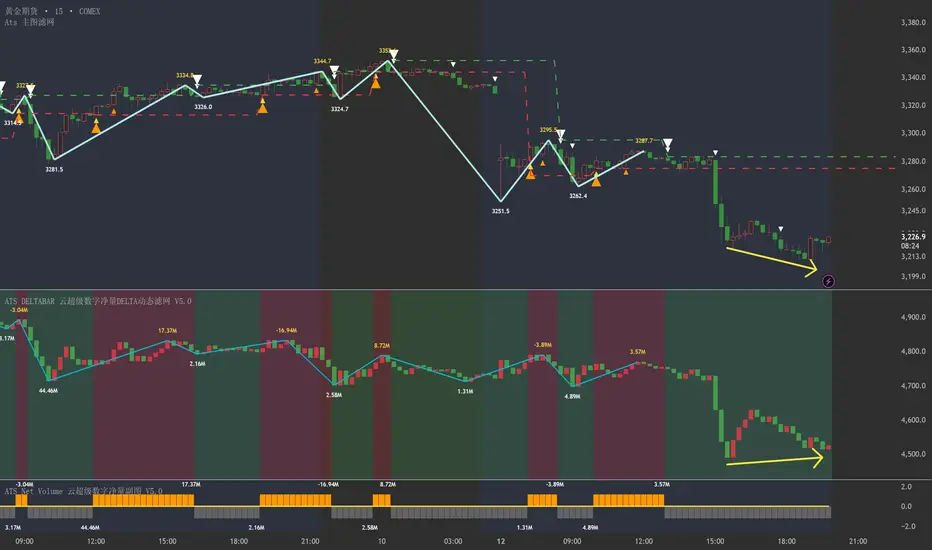
GC15min15-minute cycle: Still in net outflow (no shift to net inflow yet). Price and delta show a bullish divergence (bottom divergence) within this state. 15分钟周期未转净流入状态,目前仍然是净流出状态,可以看出这个状态里面,价格和deltaba处于底背离由Simon2025_CN提供0
GWFX Global:USD/JPY stuck in range around 113 USD/JPY is very quiet in Tokyo's open, stationary around 113 the figure, with the buyers lurking just below the last amid a better risk environment. USD/JPY bulls were able to capitalise on a slightly improve tone in risk and rose to 113.13 overnight as US stocks manage to scrape a positive close on Wall Street. The USD/JPY pair dipped below 113.00 soon before press time, adding credence to the bearish divergence of the relative strength index (RSI) seen in the hourly chart. The bearish development on the hourly RSI also indicates the recovery rally from the recent low of 112.30 has likely ended. The bearish RSI divergence would be invalidated if the pair rises above 113.23.做多由GWFXGlobal提供0
Global Tradable Assets Enter a “Profit-Taking + Psychological Th### From the current market signals, **global tradable assets are indeed at a risk juncture of "profit-taking wave + psychological threshold"**. Combining the trends of U.S. stocks, gold, and A-shares, we can analyze the risk logic from the following dimensions: ### I. U.S. Stocks (S&P 500): The "Carnival Top" Signal at 7,000 Points After the S&P 500 broke through 7,000 points, the technical picture shows **"volume expansion without price increase + multiple top pattern"** — the previous rally was driven by expectations of Fed easing and the AI concept, but recent increased trading volume has failed to push the index to new highs, indicating that capital is "taking profits at new highs". Meanwhile, U.S. stock valuations have exceeded the 95th historical percentile; if the Fed shifts its policy or economic data falls short of expectations, it is likely to trigger a "profit-taking stampede", similar to the tech stock correction risk in 2021. ### II. Gold: The "Chasing High Trap" at $4,000 After breaking through $4,000, gold entered a period of consolidation and correction, a typical case of **"profit-taking after peak buying"**. The previous gold rally was driven by geopolitical conflicts and safe-haven sentiment, but bullish momentum has now weakened. If the U.S. dollar index rebounds (amid recurring expectations of Fed rate hikes), gold may face a medium-term correction. This "pullback after rallying" trend is similar to the "bull trap at the head of a head-and-shoulders top" we discussed earlier, making it easy for retail investors who chase high to get trapped at elevated levels. ### III. A-Shares (Shanghai Composite Index): The "Emotional Top" Pressure at 4,000 Points The Shanghai Composite Index pulled back as it approached 4,000 points, a result of **"policy expectations + capital divergence"**. The previous rally relied on favorable policies and foreign capital inflows, but 4,000 points is a strong psychological resistance level for the market, prompting some capital to "take profits and exit". At the same time, A-share trading volume has not continued to expand, indicating insufficient upward momentum, and the market is likely to enter a period of consolidation or correction in the short term. ### IV. Operational Recommendations: "Defense First, Phased Profit-Taking" 1. **U.S. Stock Investors**: If holding tech stocks or index funds, consider phased reduction of positions and set stop-loss levels below 6,800 points to avoid potential correction risks. 2. **Gold Traders**: Avoid chasing high in the short term; if gold breaks below $3,950, be wary of a further drop to $3,800. 3. **A-Share Participants**: Reduce positions in thematic stocks with significant previous gains on rallies, focus on defensive opportunities in undervalued blue chips, and control positions below 50%. The signal of "synchronized peaking of global assets" is essentially a collective profit-taking behavior by capital during the "economic cycle transition period". What we ordinary investors need to do is not to be dazzled by the "new high carnival", remember the principle of "being fearful when others are greedy", first defend against risks, and then wait for the next round of opportunities~由chenchencheng2011提供0
POL/USDT Wyckoff BottomWe have just witnessed a Spring in Wyckoff Accumulation Scheme , followed by a long wick pulling back up to the TR (Trading Range), which best fits WAS scheme above (lower volume than the previous bullish candles). Now, we are waiting for SOS (SIGN OF STRENGTH) which has a massive volume with price skyrocketing. Regarding RSI, check the weekly chart, the spring has made a new low with even higher RSI than the previous low (bullish divergence). POL now is coiled and more buy than sell. I think POL has enough narratives to fulfill this plan (heavily undervalued as well). I mean, accumulate at this price before it is too late.做多由quachgiahy提供1
15-Minute Market Quick Review (ETH & BTC)Conclusion first. ETH: Just completed a surge and pullback. Short-term bias is bullish, but it's at the lower end of the upper supply zone; no chasing, wait for a pullback confirmation to enter. BTC: Still within the 112–113k consolidation box. Direction is undecided, tends to 'rally up→fill gap' before taking a side. ETHUSD(左图 | 15m) Structure: Previously, it advanced in a stair-step manner, just breaking down after a high at the 4180–4200 level. Key Levels: Resistance: 4180–4200 (upper supply/previous high cluster) Support: 4145–4152 (recent pullback zone), 4115–4125 (staircase pivot), 4080–4090 Two Execution Plans Bounce Buy (Priority) Trigger: Pullback to 4145–4152 with M5 shrinking volume bottoming out → bullish candle with expanding volume, McG re-crossing above, CDV/OBV aligning in correction. Entry: Small FVG fill near 4148±. Stop Loss: Below 4140 (0.4–0.6R). Targets: 4180 → 4195/4200 in batches; if 4200 is held, leave a trailing position for higher levels. Expiration: 15m candle closes below 4140 with expanding volume. Red Zone Counterattack Short (Secondary) Trigger: Fake breakout + M5 reversal BOS within 4180–4200, RSI divergence/price-volume rollback. Stop Loss: Exit immediately if above 4205. Targets: 4160 → 4125 in batches. Note: Once 15m candle closes above 4200 and pullback fails to break below, short bias is invalid; switch to bounce buy. BTCUSD (Right Chart | 15m) Structure: After prior decline, it has been consolidating horizontally, currently fluctuating within the 112.4–113.4k range. Key Levels: Resistance: 113.3–113.9k (box top/supply) Support: 112.2–112.5k (box pivot), 111.6–111.9k (lower bound/weak low) Two Execution Plans Top of Box Short (Box Logic) Trigger: Fake breakout + M5/M15 reversal at 113.3–113.9k with volume rollback. Stop Loss: Above 114.1k. Targets: 112.6k → 112.2k. Expiration: 15m candle closes strongly above 114k without pullback failure; if broken, switch to bounce buy targeting 114.8k/115.5k. Bottom of Box Rebound Buy Trigger: Lower shadow + shrinking volume bottoming out → expanding volume reversal at 112.2–112.5k, OBV/CMF aligning in positive territory. Stop Loss: Below 111.9k. Targets: 113.0k → 113.5k. Expiration: If below 111.9k with failed rebound, beware of filling lower liquidity at 111k/109k.由cherry_66提供3312
艾略特波浪分析 – XAUUSD(2025年10月13日) ________________________________________ 🔹 1. 总体概述 在之前的交易计划中,我预测在一次恐慌性抛售(panic sell)之后, 价格将出现修正性上涨(corrective rally)。 这种走势由 H1 时间框架中的蓝色 C 浪 所确认,其长度明显超过正常范围。 ________________________________________ 🔹 2. 动量 (Momentum) D1 动量目前正在向下反转, 但由于价格与动量之间出现背离(divergence), 说明上行力量仍然较强。 H4 动量现在已经进入超买区(overbought zone), 因此在接下来的 1–2 根 H4 蜡烛 内, 可能会出现短期回调下跌。 H1 动量目前正在下降,价格则横盘整理(sideway), 因此我们应当继续观察该区域的走势。 ________________________________________ 🔹 3. 波浪结构 (Wave Structure) D1 图表: • 价格仍位于黄色第 5 浪之中。 • 虽然 D1 动量正在下降,但由于 第 5 浪呈现扩展结构(Extended Wave 5), 一旦开始修正,下跌的第一段通常会非常陡峭且幅度较深。 • D1 蜡烛与动量之间的背离仅表明上涨动能减弱, 但尚未完全确认趋势反转。 H4 图表: • 价格当前沿价格通道的上轨运行。 • 之前形成了 蓝色 ABC 结构,现在价格在前高附近形成了三重顶(Triple Top)。 • 这种形态暗示价格可能在构建一个 WXY 结构,其中 Y 浪 可能发展为: 1️⃣ 五浪结构的平坦形态(Flat),或 2️⃣ 三角形形态(Triangle)。 H1 图表: • 蓝色 ABC 修正浪已完成,随后价格反弹至前高附近。 • 当前价格在该区域横盘整理。 • 从这里可以看到两种可能性: o (1) 修正浪已经结束,价格进入五浪推动结构(Impulse),意味着仍有上涨空间。 o (2) 修正浪尚未结束,价格可能继续下跌,与 H4 的两种情景一致。 ________________________________________ 🔹 4. 补充说明 • 当前的波浪结构显示出明显的重叠(overlap)。 • 由于此前的恐慌性抛售,现在这种缓慢的上涨走势是合理的, 它很可能属于一种**引导楔形结构(Leading Diagonal)**的第 1 浪。 • 在这种情况下,当价格突破通道上轨时, 应会出现一波强劲的第 3 浪上涨。 • 但目前价格依然横盘震荡,因此这种结构也可能是修正中的 X 浪。 ⚠️ 重要提示: 与上周五的 买入信号(Buy Setup) 不同, 当前情形存在两个相反的可能性, 因此信号的成功概率较低。 ________________________________________ 🔹 5. 交易计划 (Trade Plan) 短线 Sell 策略: • Sell Stop: 4040 • SL(止损): 4058 • TP1(目标): 4010 风险管理: 如果价格强势突破上方,确认第 3 浪的特征, 则应立即取消该 Sell 策略。 如前所述,该信号概率较低且止损较宽, 因此建议仅观望或使用小仓位轻量参与。 做空由WavePoint_FX提供2
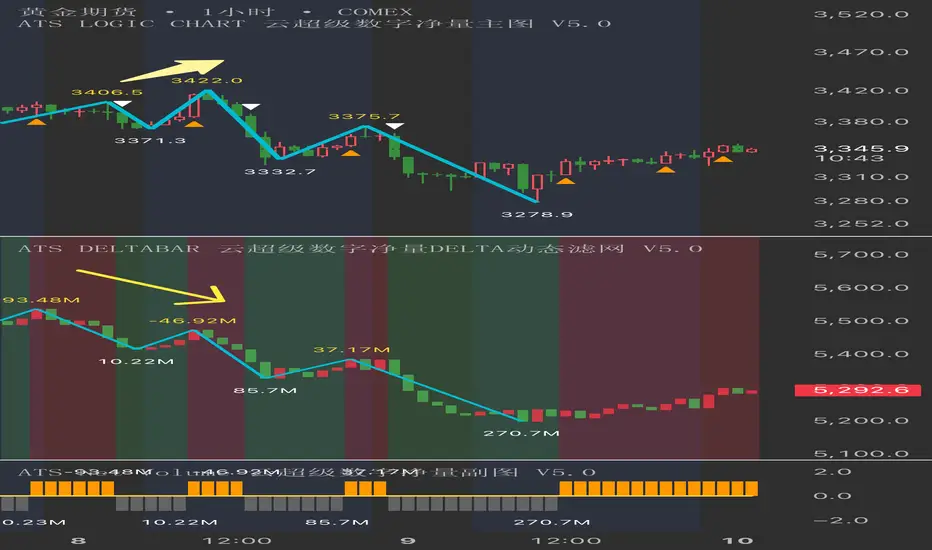
Bitcoin 45-minute review analysisFrom the chart perspective, whether it's a price-Delta bearish divergence or a case of bearish effort without results, the Delta indicator has performed remarkably well. The latest chart shows a breakout of the LPS (Last Point of Support) signal with convergence, and the price immediately surged upward. 从盘面看,不管是价格和delta发生顶背离,还是价格和delta发生空头努力没有成果,delta指标都表现得很出息,最新的盘面形成了共振突破LPS信号,行情立马涨上去做多由MagicalJelly提供2
GC 1H ,The reason for the price decline. Observing the arrow position on the main chart, the price broke upward, but the subchart indicator **Deltabar** did not follow with an upward breakout. This created a **price-volume divergence (non-resonant breakout)**, leading to the subsequent downward breakdown in gold prices. 观察主图箭头位置,价格向上突破,但是副图指标Deltabar,并没有向上突破。这种发生了量价顶背离,即非共振突破的行情,导致黄金向下跌破。 由Simon2025_CN提供0
WCT Elliott Wave Count: Wave 3 Targets $0.55Current uptrend aligns with Wave 3 extension (161.8% Fibonacci level). RSI divergence warns of pullback risk由a0509提供0
FREEDOG/USDT Advanced Technical Deep DiveCombining RSI, MACD, and Volume to predict next moves: RSI: 68 (overbought), but divergence suggests caution. MACD: Bullish crossover, but histogram is shrinking. Volume: Surge post-listing, but declining on recent rallies. Key Takeaways: Short-term bullish, but volume decline raises sustainability concerns. Target $0.0040 if resistance holds; stop-loss at $0.0025. How would you adjust this strategy? Share your indicators!F做多由xiannvyou0提供0
$GT Daily MACD Confirms Bullish TrendOn April 2, 2025, NASDAQ:GT ’s daily MACD shows a bullish crossover above the signal line, reinforcing the uptrend. Price sits at $24.79, eyeing $25.95. Lack of bearish divergence keeps $23.50 as solid support. 做多由S2A9提供0
Daily $GT golden cross (50/100 EMA) sparks rally past $20Daily NASDAQ:GT golden cross (50/100 EMA) sparks rally past $20. RSI rising, volume solid. Targets $27, support at $19. No bearish divergence; $25 interim goal. Gate.io adoption aids trend. Watch $22 for pullback buys. 做多由S2A9提供0