TradingView IPO Calendar: master upcoming offerings

IPO Calendar is a financial tool that lets you track companies going public. Each month, many businesses start offering their stocks to a broader audience through an initial public offering. Our calendar helps you identify the most promising opportunities to gain market momentum.

CONTENTS:

What is IPO

An initial public offering is the process of a company selling its shares to the public to raise capital for production, development, and other strategic activities. An IPO is a crucial step in a company's lifecycle, as it can either propel the company forward or present significant challenges.

Publicly-traded companies are often highly profitable, with market capitalization that can exceed the GDP of some countries. This is because a wider audience can invest — from retail investors buying a few shares to investment funds managing billions of dollars. That's why management aims to go public at the right moment.

Before an IPO, a company must prepare all necessary fillings and meet specific requirements, such as maintaining low debt-to-equity ratio and having a well-managed, profitable business with a leading position in its niche.

Once public, a company faces stricter regulations. It must comply with criteria set by the SEC and other regulatory authorities, and its financial statements become publicly accessible, allowing you to examine them directly on TradingView.

What is the IPO Calendar

The IPO Calendar, part of the TradingView Calendars, helps you plan your trades and investments. It allows you to view upcoming public offerings and monitor previous IPOs, with access to company statements and detailed information on each listing.

How to access the IPO Calendar

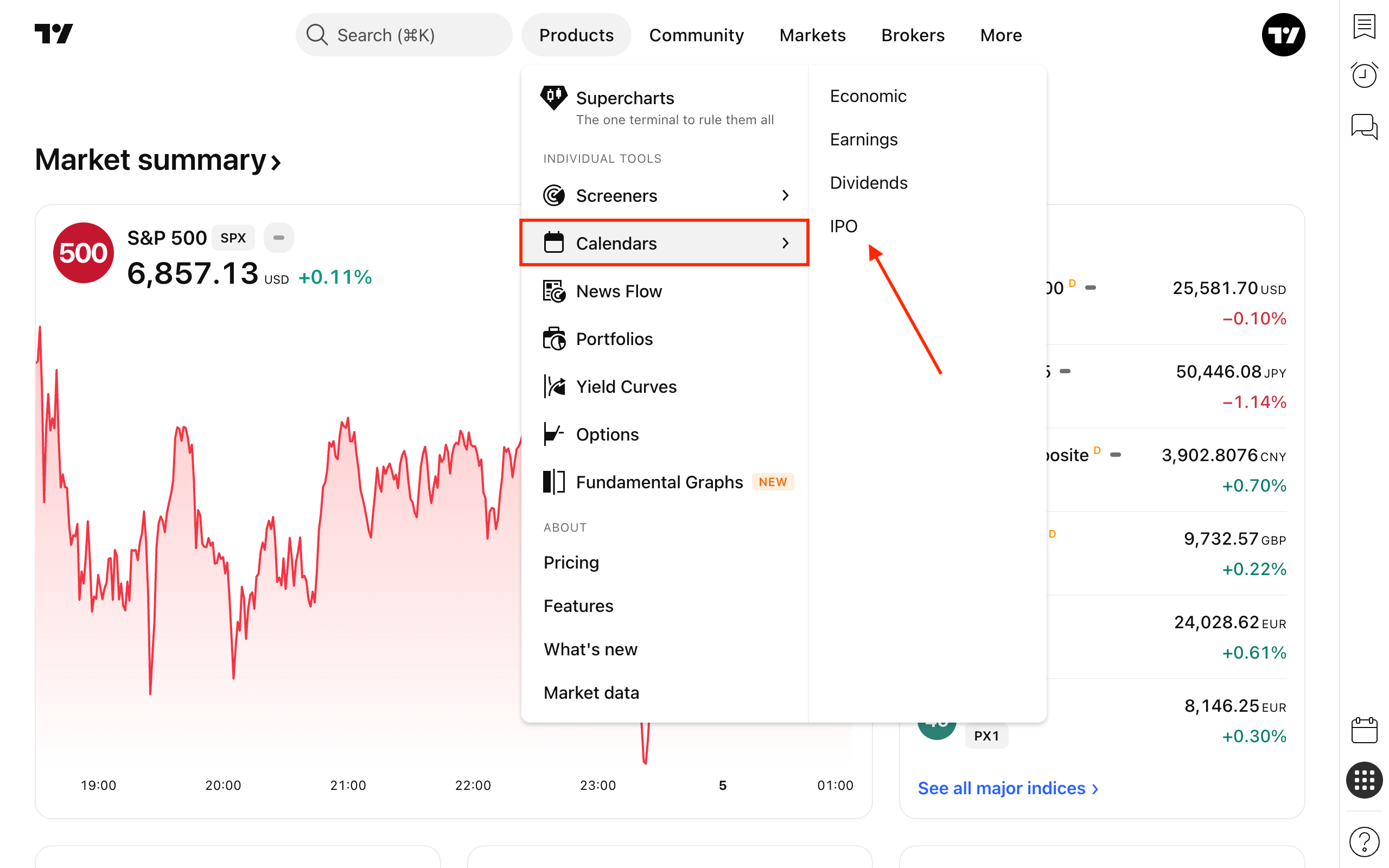
From the Products dropdown, hover over Calendars and select IPO.

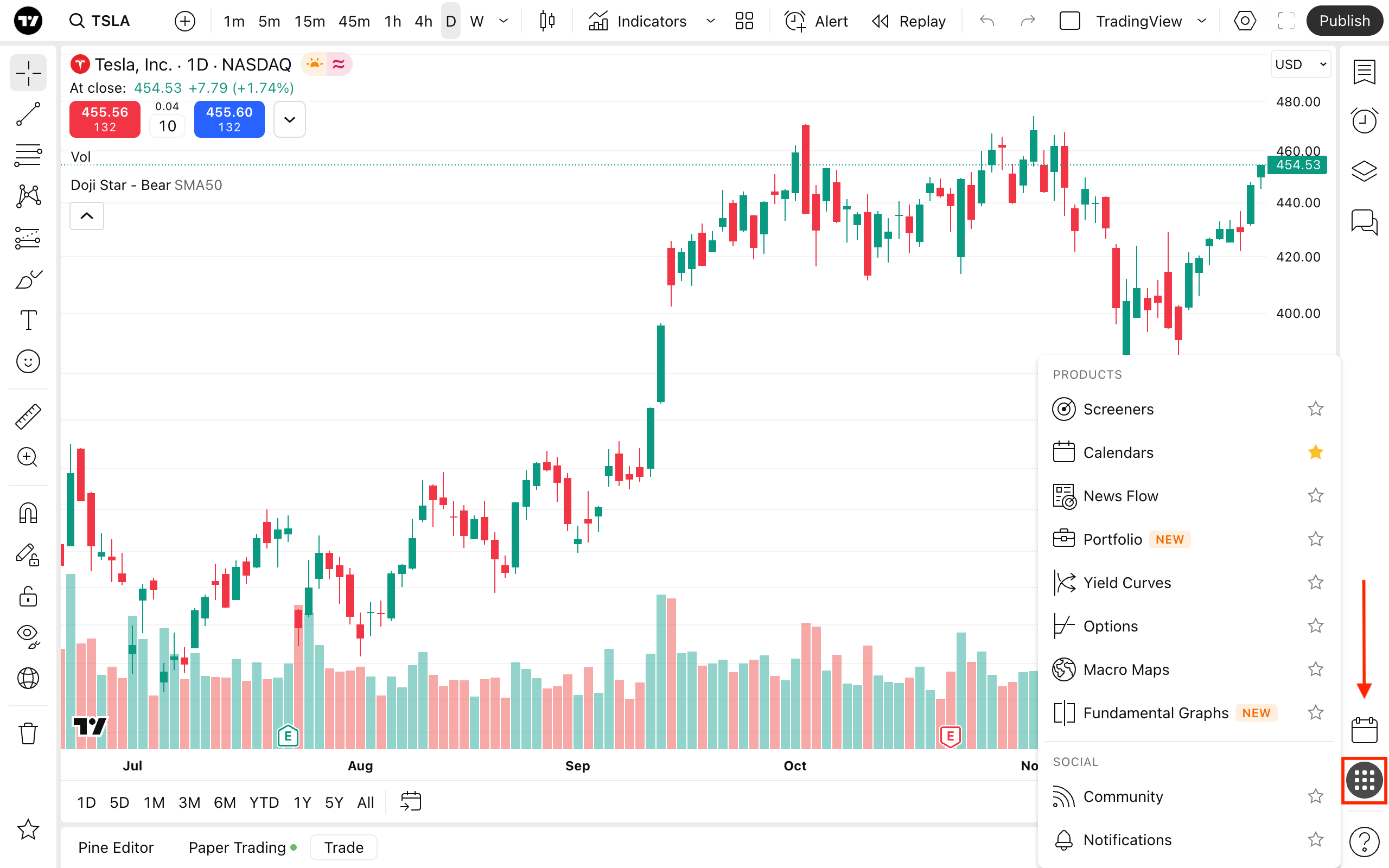
Alternatively, use the overlay sheet available on any TradingView page, even while charting. Click the Products menu on the right toolbar and select Calendars.

How to read the IPO Calendar

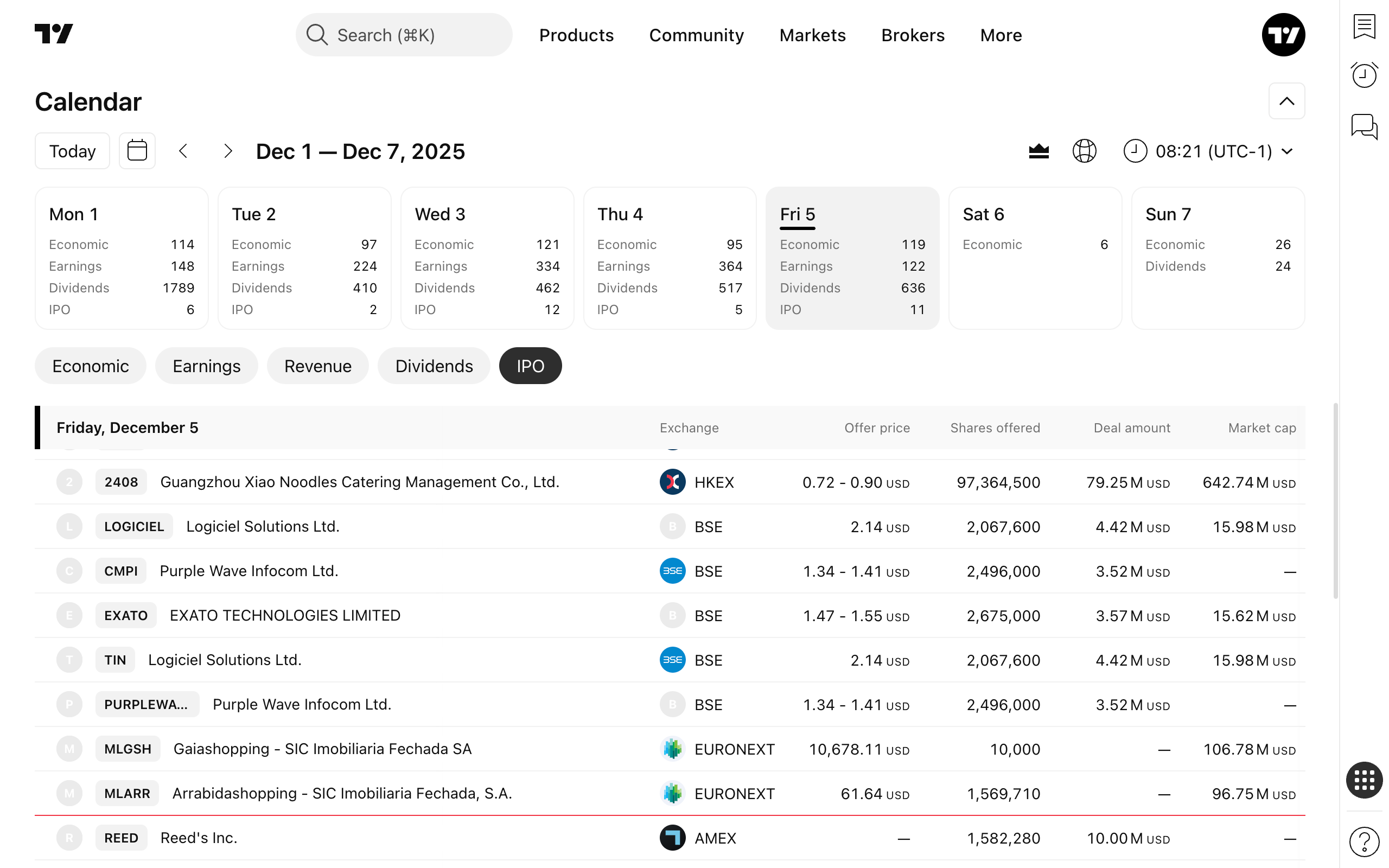
The interface is similar to other TradingView calendars. Key IPO stats include:

  • Date: The day the IPO takes place. Scroll to view past and upcoming offerings
  • Exchange: The marketplace where trading begins. The choice of exchange can influence the number of shares outstanding, shareholders requirements, and other IPO factors
  • Offer price: The price at which the company sells its shares to the public
  • Shares offered: The total number of shares the company sells
  • Deal amount: Offer price × shares offered
  • Market cap: Offer price × total shares outstanding (post-IPO),  including existing shareholder stake

These statistics indicate the position a company aims to establish after the IPO. Comparing the offer price, stock price, and market capitalization can help gauge market expectations and management objectives.

However, market cap and stock price alone don't guarantee growth — they reflect market sentiment rather than fundamentals. To assess prospects reliably, also consider the company’s financials, business model, and competitive environment.

Oh, and one more scheduled thing…

Careful planning and preparation are key to successful trading and investing. Long-term sustainability requires diversification. Stocks offer high potential gains but also high volatility. Bonds can provide a safer investment alternative.

Explore Yield Curves to identify government-issued securities that help reduce portfolio risk while safeguarding your savings.

Also read: